Home › Commercial Gravel-to-Asphalt Conversions
Upgrade your gravel lot with commercial gravel to asphalt conversions in Colorado Springs, CO. We regrade and compact your existing surface, add structural base as needed, and pave with asphalt so customers, employees, and delivery trucks enjoy a cleaner, dust free, and more professional site.
Precision Asphalt Colorado Springs provides professional commercial gravel to asphalt throughout Colorado Springs, CO, Colorado and the surrounding area. Our licensed, insured crew delivers safe, clean, on-time work with a free estimate before anything begins. Call (719) 722-2508 or request your free quote.
Turn Your Gravel Lot Into a Durable Asphalt Surface
If you are running a business in Colorado Springs and you are tired of dust clouds, mud ruts, and frustrated customers trying to park on loose rock, converting your gravel lot to asphalt is usually the most practical long-term fix. Precision Asphalt Colorado Springs focuses on commercial gravel-to-asphalt conversions, which means we understand how to turn an uneven, constantly shifting gravel area into a smooth, load-bearing asphalt surface that holds up to Colorado’s sun, snow, and freeze-thaw cycles.
Gravel is cheap to install but expensive to live with. You keep paying in grading, new rock deliveries, dust problems, and vehicles getting stuck after storms. Asphalt has a higher upfront cost but a much lower cost per year of use, especially on busy commercial sites like office buildings, churches, industrial yards, retail centers, and small trucking or equipment yards. We help you look honestly at how you currently use your lot, the types of vehicles using it, and how drainage and snowplowing work today, then design an asphalt section that actually fits your site instead of a one-size-fits-all overlay.
Our team in Colorado Springs is local, so we are familiar with common soil conditions on the east side near Powers, in older parts of town with fill dirt, and on sloped foothill properties. This local knowledge matters because gravel lots often hide soft spots, buried debris, and poor drainage that will destroy new asphalt if they are not corrected before paving.
How a Commercial Gravel-to-Asphalt Conversion Actually Works
A solid commercial gravel to asphalt job is less about the blacktop you see on top and more about the work you do underneath it. At Precision Asphalt Colorado Springs, a typical conversion starts with a site walk and measurements. We check slope, drainage paths, traffic patterns, where trucks turn, and how thick your current gravel base is. We also look for low spots that hold water and any signs of pumping mud when heavy vehicles turn.
Once we understand the conditions, we bring in grading equipment to reshape the existing gravel. In many cases, a good gravel base can be reused, but it usually needs to be regraded and compacted. We pull off loose, dusty material and either blend it in or remove it if it is too fine. If test probing or equipment shows soft subgrade beneath the gravel, we undercut those areas, remove the weak soil, and replace it with compacted road base or structural fill. Skipping this step is one of the main reasons cheap conversions fail.
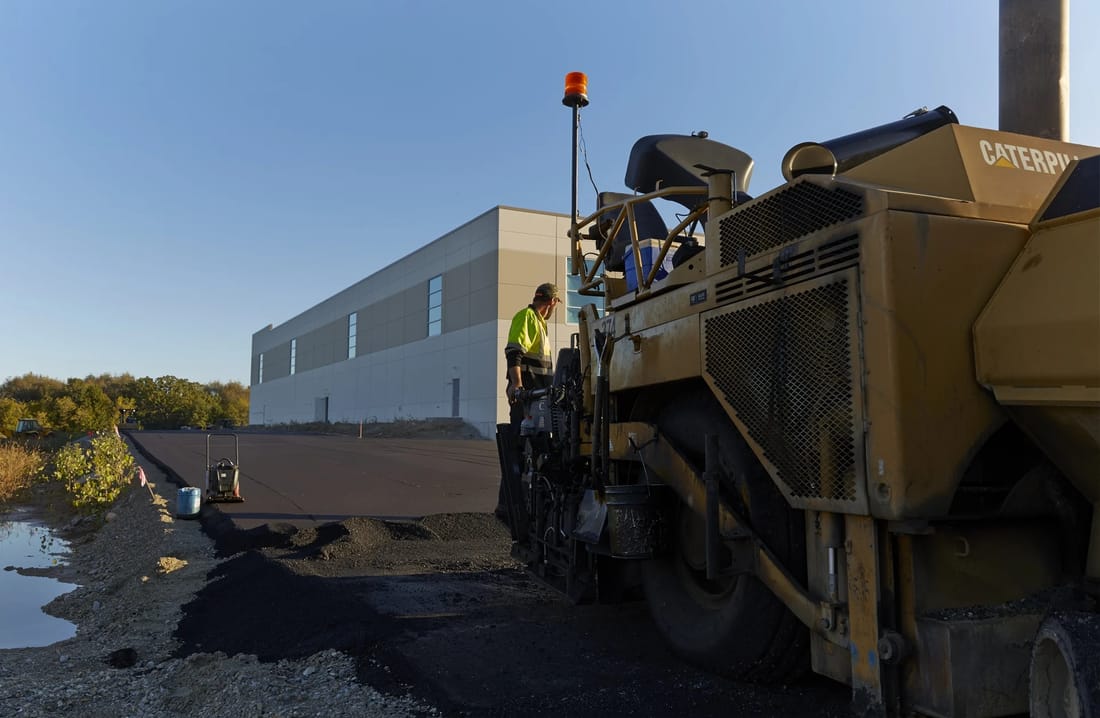
After grading, we compact in multiple passes with a vibratory roller to reach target density. In some commercial settings, especially where trucks or dumpsters are involved, we recommend adding more base rock to increase total section thickness. Only after the base checks out do we apply a tack coat (if tying into existing asphalt or concrete) and then pave with hot-mix asphalt. For most light to medium duty commercial lots we install 3 to 4 inches of asphalt in one or two lifts. For heavier truck yards or drive lanes to loading docks we may go thicker or specify a different mix design. We finish by rolling the mat until it has a tight, even surface with good compaction, then we cut clean joints at transitions and seal them to keep water out.
Design Choices: Thickness, Mix Types, and Drainage for Colorado Springs Conditions
The best commercial gravel to asphalt conversion is one that is designed for your specific use. There are three main design decisions we walk through with you: pavement thickness, asphalt mix type, and drainage. These choices affect both cost and how long your new lot will last.
For thickness, we look at traffic. A small office or daycare with cars only can often use around 3 inches of asphalt over a solid base. A retail center with regular delivery trucks usually pushes that to 4 inches or more, and industrial or fleet yards sometimes go to 5 or 6 inches in drive lanes and loading areas. We may also vary thickness across the site, using heavier sections where trucks travel and lighter where only cars park, which can help balance performance and budget.
Asphalt mix types matter in our climate. Colorado Springs sees hot summer sun that can soften asphalt and cold winters that drive freeze-thaw cracking. We typically specify a commercial hot-mix with the right aggregate size and binder content to handle both conditions. In higher stress areas like tight turning radiuses for trucks we may recommend a mix with more crushed aggregate for better rut resistance. We are familiar with regional plant mixes and only use products that have proven themselves on local commercial projects.
Drainage is often the biggest design problem on former gravel lots. Gravel tends to hide standing water because it soaks in and spreads. Once you pave, that water needs somewhere to go. We set elevations carefully so water runs to existing inlets, swales, or new drains instead of collecting in the middle of the lot or along building foundations. Sometimes we add shallow gutter swales or adjust curb lines to correct long-standing drainage issues. Good drainage planning on the front end saves you from ice sheets in winter and puddles that chew up asphalt over time.
What Drives Cost and Common Problems to Watch For
When you price a commercial gravel to asphalt conversion, most of the cost drivers are below the surface. The single biggest factor is how much repair and base work your site needs before paving. A well-compacted gravel lot that has been maintained and drains reasonably well can often be converted with mostly grading, minor base correction, and new asphalt. A lot with deep ruts, standing water, and soft spots will require more excavation, more base material, and more labor, which adds up.
Other cost factors include access for equipment, total square footage, required asphalt thickness, and how many edges we have to match (such as tying into city streets, existing drives, or building entries). Working around business hours can also affect pricing. If you need us to pave nights or weekends to keep operations running, we can do that, but it may change the logistics and cost.
Common problems that we address head-on include weak subgrade, hidden debris, and poor drainage. Older gravel lots sometimes sit on top of old fill material like construction waste or topsoil. If heavy trucks have created deep ruts in the same spots year after year, it is usually a sign that the subgrade is failing, not just the surface. We identify those areas, dig down to firm material, and rebuild. It costs more up front, but it prevents the classic failure where a new asphalt lot looks great for a year or two then suddenly develops deep dips and alligator cracking where trucks turn.
We are also realistic about Colorado freeze-thaw. Water that seeps under the asphalt will freeze, expand, and break the pavement from below. This is why we take time to correct ponding and why we may recommend edge drains or subgrade improvements in specific problem areas. Precision Asphalt Colorado Springs would rather explain the real conditions and options than sell you a quick overlay that will not survive our winters.
What to Expect When You Work With Precision Asphalt Colorado Springs
Businesses want to know how much disruption a gravel to asphalt project will cause. We explain the process up front so you can plan around it. For most commercial lots, the active conversion takes a few days to a week, depending on size and complexity. We start by working with you to map out traffic flow and temporary parking so customers, tenants, or employees can still access what they need. On multi-entrance sites, we often phase work so one access stays open while we build out the other.
Communication is a big part of keeping things smooth. Before equipment shows up, we review the plan, where crews will stage, and what areas will be off limits each day. During work, you will have a direct contact who can respond if something on site changes, such as an unexpected delivery or weather shift. Colorado Springs weather can turn quickly, so we stay flexible, watching forecasts to avoid paving on days when sudden cold or moisture could hurt the finished asphalt.
After paving, most commercial lots are ready for light traffic within 24 hours and normal traffic soon after, although we may recommend a short delay for heavy truck use, depending on conditions. Once the asphalt has cooled and cured enough, we stripe parking stalls, ADA spaces, fire lanes, and directional arrows so the lot is ready for day-to-day use. If you want wheel stops, bollards, or signage installed, we can coordinate that as part of the project or work with your other contractors.
Before we wrap up, we walk the site with you, point out key drainage paths, joint locations, and any areas that should get extra attention during plowing or heavy equipment use. We also explain basic maintenance, like avoiding spinning tires when snowplows are pushing piles and planning for sealcoating on an appropriate schedule. Our goal is that when Precision Asphalt Colorado Springs leaves your property, you know exactly what you received, how it was built, and how to get the longest life possible from your new asphalt surface.